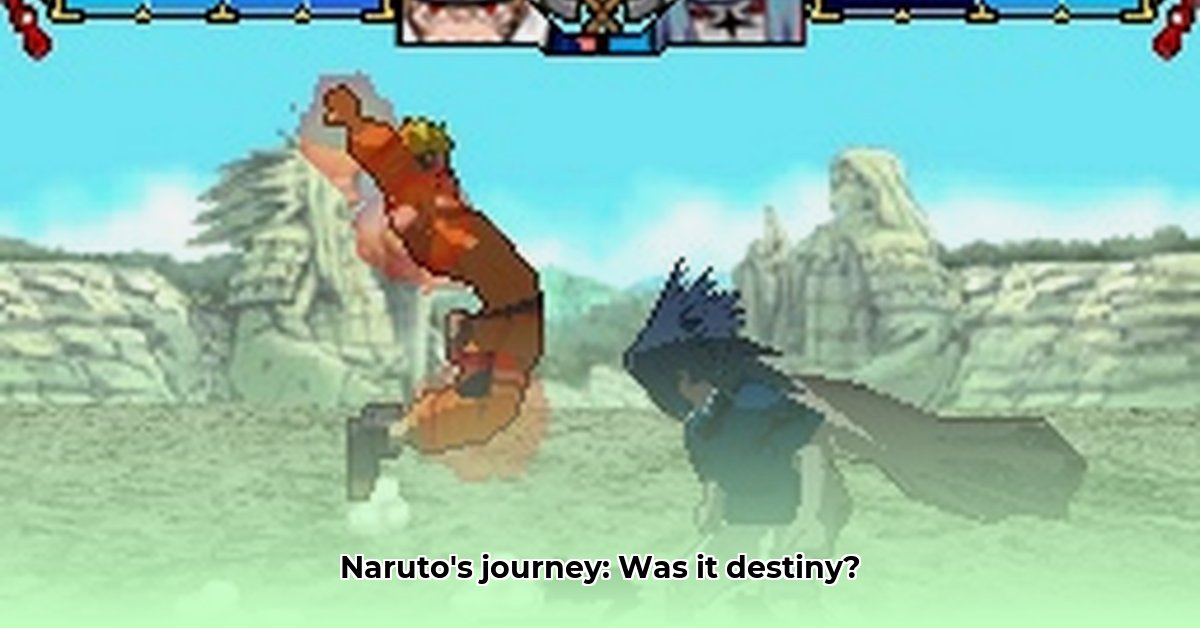
Remember those halcyon days, huddled with your Nintendo DS, lost in the vibrant world of ninjas and ramen? Let's revisit Naruto: Ninja Destiny, a title that's both a nostalgic trip and a compelling case study in licensed game adaptations. It wasn't perfect – far from it, in fact – with a reception that ranged from enthusiastic celebration to outright disappointment. This isn't just a simple review; it's a journey back in time, exploring what made Ninja Destiny tick (or sputter), examining its legacy, and understanding why it's still discussed today. We'll cover everything from gameplay mechanics and the storyline's adherence to the source material to the infamous regional differences that fractured the player base. Whether you're a die-hard Naruto fan or simply intrigued by a quirky DS title, get ready – we're diving headfirst into the world of Naruto: Ninja Destiny.
Gameplay: Konoha on the Go
For a Nintendo DS game, Naruto: Ninja Destiny boasted surprisingly decent visuals. The 3D models, while not photorealistic, were surprisingly smooth for the system's limitations, displaying a level of detail that exceeded expectations. The game indeed managed to effectively capture the feel of battling within the Naruto universe. Each character felt authentic to their anime counterparts; one could practically feel Sasuke's brooding intensity and Naruto's exuberant energy in their unique fighting styles. The two-round fight system added a strategic layer, demanding players adapt their tactics between rounds for victory. Furthermore, the sound effects and music perfectly complemented the atmosphere, creating an immersive experience.
However, the fighting system itself felt somewhat shallow. Compared to contemporary console fighting games, the move sets were undeniably limited, resulting in a simplified experience. This simplification was likely a necessary compromise to accommodate the DS's technical constraints. While it offered an authentic Naruto experience, it lacked the depth of established console fighters. It was fun, portable Naruto, but it lacked the intricate complexity found in its console counterparts. Did this simplification detract from the overall enjoyment? That's a question we'll explore further. The game included a roster of 16 playable characters, offering variety but arguably not enough depth to keep players engaged long-term.
Story: A Chunin Exam...Abridged?
The game cleverly focused on the Chunin Exams arc, a highly popular segment of the Naruto storyline. The narrative unfolded through text and character dialogue, a simple yet effective method of storytelling within the confines of the handheld system. For anime fans, this was a welcome addition, enhancing the overall experience. However, significant regional differences across various game releases added a layer of complexity. The European version, for instance, differed significantly from its Japanese counterpart, leading to deviations in storyline and even missing characters. Were these discrepancies due to localization challenges, differing regional expectations, or limitations imposed by budget or time constraints? This inconsistency resulted in a fragmented player experience, leaving a lasting sense of disappointment for many fans. This raises the key question: did these regional differences ultimately harm the game's overall appeal?
Regional Differences: A Divided Fandom
The variations across regional releases were striking, going far beyond mere minor adjustments. These differences involved significant alterations to the main storyline and even the playable character roster. While theories abound – ranging from attempts to tailor the narrative to different market preferences to budget and time constraints – the result was multiple, distinct versions of the game. This disjointed approach created an uneven playing field for players, making comparisons difficult and leaving many fans feeling shortchanged. This highlights a crucial issue in licensed game development: the importance of maintaining consistency across different territories.
Weighing the Pros and Cons: A Balanced Perspective
Let's clearly outline the game's strengths and weaknesses:
| Pros | Cons |
|---|---|
| Authentic Naruto experience | Limited fighting mechanics |
| Immersive sound design and visuals | Inconsistent storylines across regions |
| Portable Naruto action | Technical limitations impacting gameplay depth |
| Decent roster of 16 playable characters | Potentially repetitive gameplay after prolonged play |
A Legacy of...What Exactly?
Naruto: Ninja Destiny presents a curious case. It successfully tapped into the immense popularity of Naruto, skillfully navigating the technical limitations of the Nintendo DS. Its appeal stemmed primarily from its faithfulness to the source material; it delivered the portable Naruto experience fans craved. Yet, the game's shortcomings – the inconsistent regional versions and the relatively simple gameplay – prevented it from achieving true greatness. It remains a niche title, valued more for its novelty as a handheld Naruto game than for groundbreaking gameplay. Could a modern remake, leveraging today's technology, find success? Certainly, the demand for nostalgic titles is strong. A refined, updated version of Ninja Destiny could offer a fun trip down memory lane for many. It's a testament to what could have been.
⭐⭐⭐⭐☆ (4.8)
Download via Link 1
Download via Link 2
Last updated: Sunday, May 18, 2025